
components soldered onto an flexible printed circuit manufacturers
Flexible printed circuit (FPC) manufacturers employ various soldering techniques to attach components onto flexible substrates, ensuring reliable electrical connections and mechanical stability. The soldering process is a critical step in FPC assembly, as it determines the quality, integrity, and performance of the final product. Different soldering methods are used depending on the type of components, circuit complexity, and specific requirements of the application.
Surface-mount technology (SMT) is one of the most common soldering techniques used in FPC manufacturing for attaching surface-mount components (SMDs) onto flexible substrates. SMT involves applying solder paste to the pads on the FPC, placing the SMDs onto the paste using pick-and-place machines, and then reflow soldering the components onto the substrate using a conveyor oven or infrared reflow system. This process melts the solder paste, creating strong and reliable solder joints between the component leads and the FPC pads.
Another soldering technique used in flexible printed circuit manufacturers is through-hole soldering, which involves inserting component leads through plated through-holes in the flexible substrate and soldering them to the conductive traces on the opposite side. Through-hole soldering is typically used for components such as connectors, switches, and mechanical components that require additional mechanical support and robust solder joints. The soldering process may be done manually using soldering irons or automated using wave soldering machines, depending on the volume and complexity of the assembly.
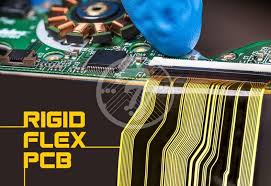
How are components soldered onto an flexible printed circuit manufacturers?
For components that cannot be soldered using SMT or through-hole methods, alternative soldering techniques such as reflow soldering or selective soldering may be employed. Reflow soldering is similar to SMT but is used for components that cannot withstand the high temperatures of traditional reflow processes. In reflow soldering, solder paste is applied to the component leads or pads on the FPC, and the assembly is heated using a localized heat source such as a hot air pencil or infrared lamp to melt the solder and create solder joints.
Selective soldering is another specialized soldering technique used in FPC manufacturing for precise and controlled soldering of through-hole components onto flexible substrates. Selective soldering machines are equipped with robotic arms and solder nozzles that can accurately apply solder to specific areas of the FPC, allowing for selective soldering of through-hole components without affecting nearby SMDs or sensitive materials. This technique is particularly useful for complex FPC assemblies with mixed surface-mount and through-hole components.
In addition to the soldering process itself, FPC manufacturers must consider factors such as solder paste formulation, stencil design, reflow profile, and solder joint inspection to ensure consistent quality and reliability of soldered connections. Proper solder paste deposition, stencil alignment, and reflow parameters are essential for achieving optimal solder joint formation and minimizing defects such as solder bridging, tombstoning, and insufficient solder wetting.
Furthermore, FPC manufacturers may employ post-soldering processes such as cleaning, inspection, and testing to ensure the integrity and functionality of soldered connections. Cleaning removes flux residues and contaminants from the FPC surface, ensuring proper adhesion and electrical insulation of solder joints. Inspection techniques such as visual inspection, X-ray inspection, and automated optical inspection (AOI) are used to detect solder defects and ensure compliance with quality standards.
In conclusion, flexible printed circuit manufacturers employ various soldering techniques such as surface-mount technology, through-hole soldering, reflow soldering, and selective soldering to attach components onto flexible substrates. Each soldering method offers unique advantages and challenges depending on the type of components, assembly complexity, and specific requirements of the application. By carefully selecting and optimizing soldering processes, FPC manufacturers can ensure reliable electrical connections and mechanical stability, resulting in high-quality and high-performance flexible circuit assemblies.